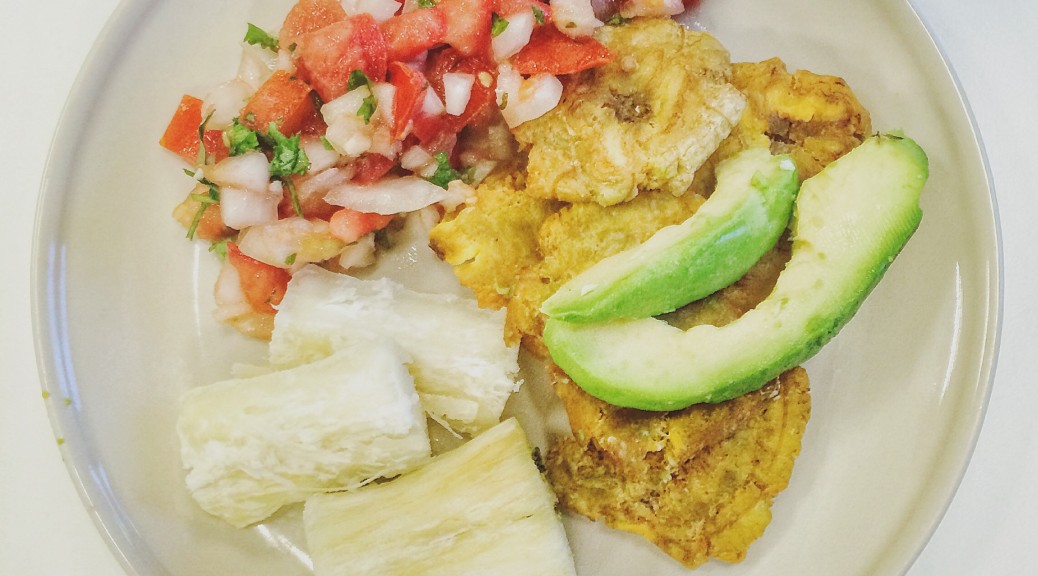
Joaquín is Cuban, and his wife is Chilean… never a dish has been so deliciously combined as this Cuban-Chilean potpourri! Cuban yucca in mojo sauce and plantains in Chilean pebre sauce.
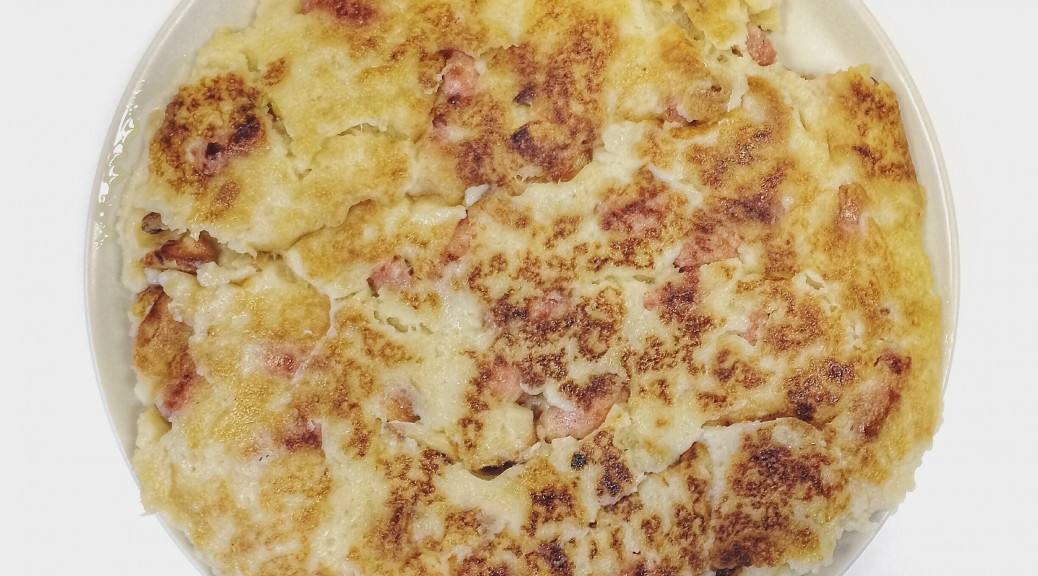
This dish is tough. It’s basically deep fried garlic, with deep fried sausage, with deep fried flour dough, cooked into an omelette. Helios says it’s a hit at 7am when going back home with friends after a night’s party… this thing for sure can soak the excess of beverage intake!
Fry the garlic cloves in a big deep pan with all oil at medium heat until golden, then remove.
Then fry the sausage pieces until crispy, then remove and turn off the fire.
Add all the flour to the oil mix until you get crumbles.
Add in the water carefully and mix until you get an homogeneous dough. Salt to taste. Stir and cook at medium heat for about 45 min.
Before the dough gets too dry, add in the sausage and the garlic. Keep on stiring and cooking for about 25 min more, until the dough is cooked and resembles a Spanish omelette.
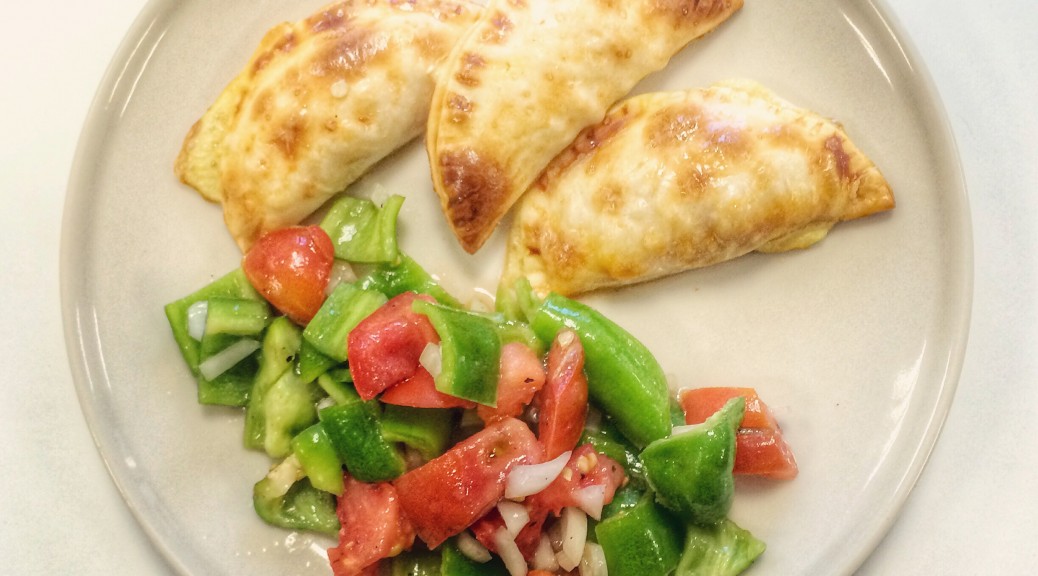
Each culture has it’s own thingy wrapped in dough: jiaozi in China, momos in Nepal, pierogi in East Europe, ravioli in Italy… Spain has got empanadillas. This is classical savory yet easy to prepare finger food; and Teba excels at it.
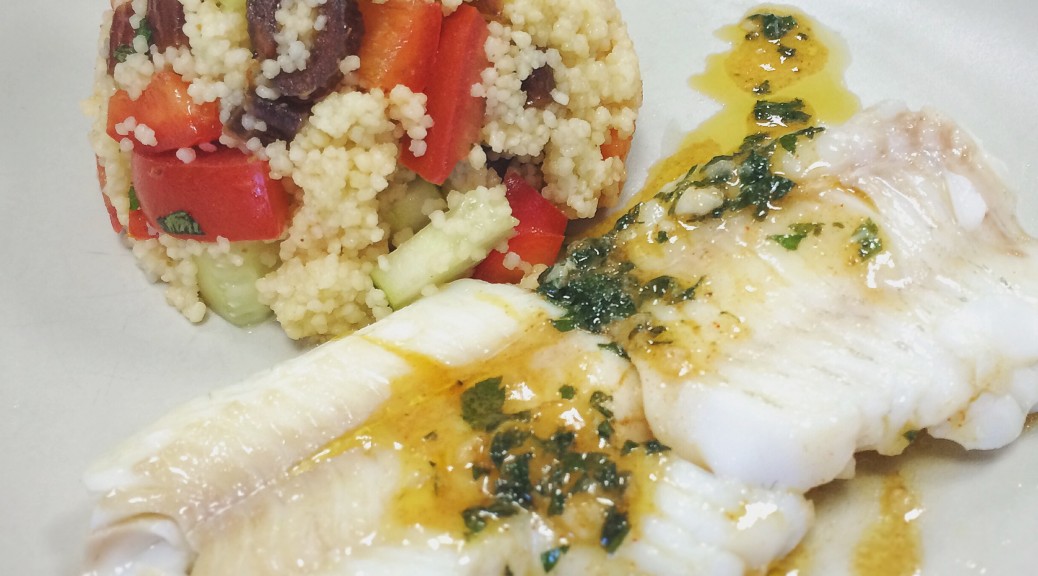
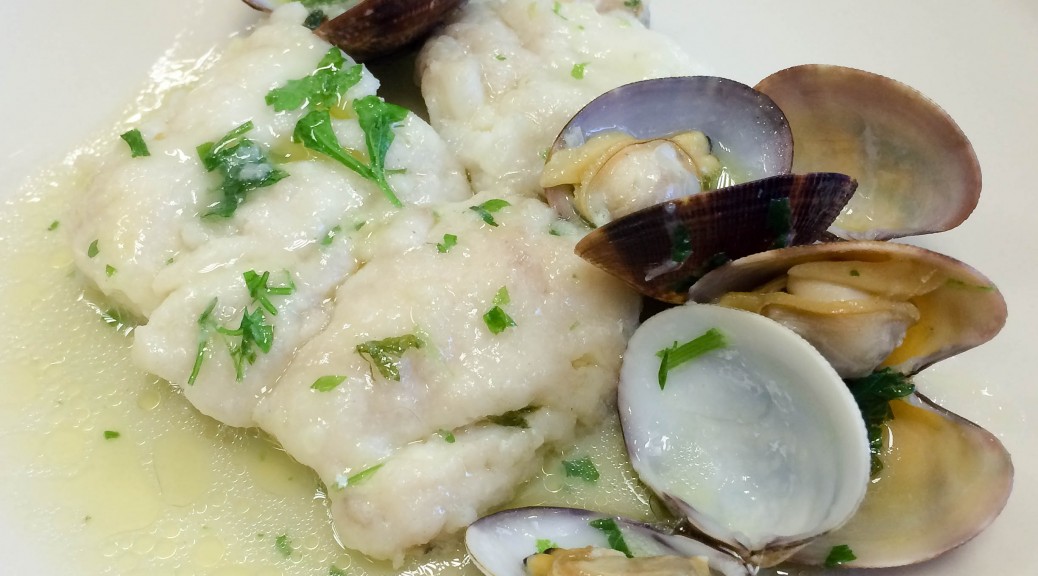
Back at home, in the Basque Country, Unai’s father is who does the cooking, and he doesn’t like fish. So when he is not around, his mother always takes the chance to prepare this simple, yet delicious typical Spanish dish.
Clean the clams and cut the hake into large pieces.
Put a sliced garlic clove in a large pan covered with 5mm of olive oil at medium heat, then remove garlic when brown and leave oil to cool.
Chop the parsley and two garlic cloves, add two tbsp of flour, a cup of water and process until homogenous.
Coat the hake cuts with flour, only the meaty part, leaving the skin clean. Place them in the pan with oil, skin facing down, sprinkled with a handful of chopped parsley.
Set it to medium-low heat and cook for about 15 min, continously agitating the pan so it doesn't stick, keeping the oil at a slight boil, until you see the meat is almost cooked.
Add the sauce, sprinkle with salt, add the clams, and keep agitating on medium heat until most clams open.
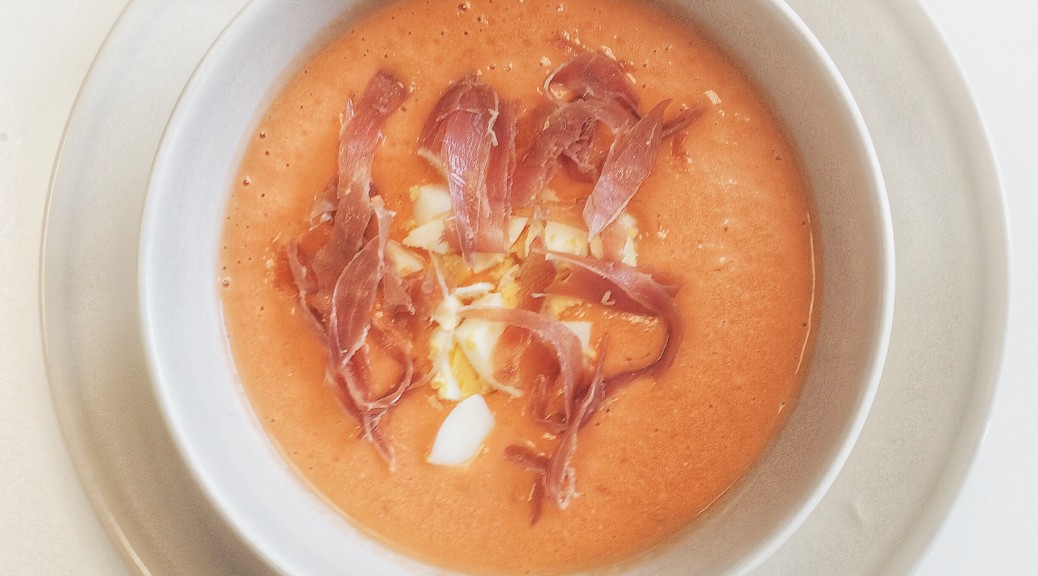
Salmorejo is typical from Córdoba, and I am familiar with this recipe because I have friends with family of the south. It’s perfect for the summer, because is light, healthy and very easy to prepare.
Peel the tomatoes. It's easier if you dip them half a minute in boiling water before.
Put the peeled tomatoes and the rest of the ingredients into a blender and blend at max speed for less than a minute. The texture has to be smooth, thick enough as to qualify as a cold soup and not as a juice. Taste and correct vinegar and salt.
Enjoy extra-cold, garnished with hardboiled egg and ham shavings!
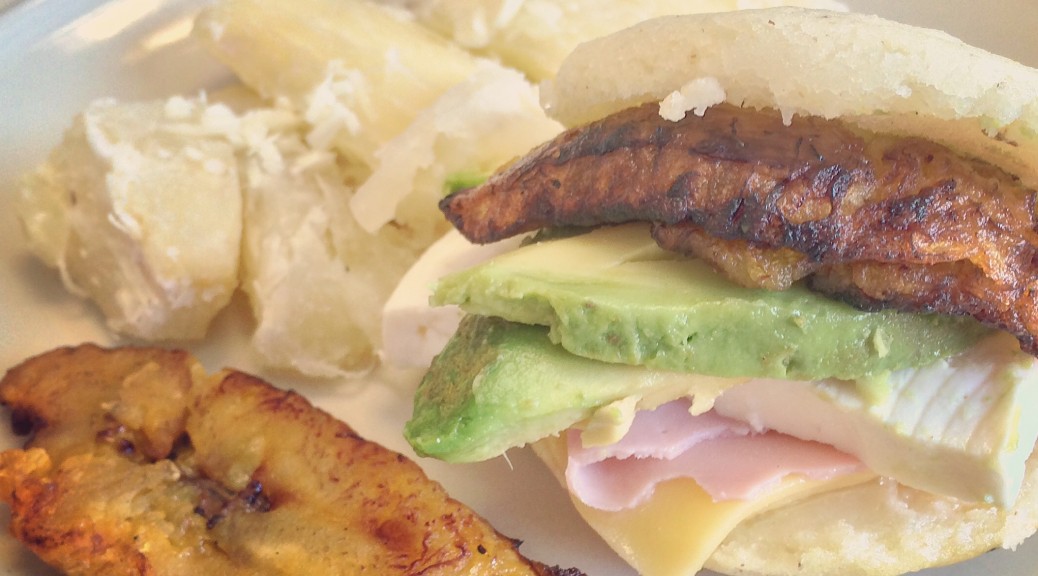
Jorge bids farewell on his last Thursday in the office with an all-Venezuelan (with a pinch of Cuban) arepada, to the music of Reynaldo Armas and cold Estrella Damm quintos.
In a bowl, put in the water and salt, and then add the flour while you squash and mix with your hands to avoid crumbles. Keep adding flour until the though is not sticky.
To make the arepas make a ball of the size of a paddle ball, and craftily convert it into a kind of UFO. This part is tricky.
Cook them on a pan at medium-high until they are golden on the outside and patting them makes a hollow sound, and store wrapped on cloth.
For the filling
Peel and cut the yuca and boil it until soft, about 10 min.
For the yuca to be even softer, you can optionaly put the cut pieces of yuca on the freezer overnight. Allow more time to cook in that case.
Finely cut or squash the garlic and mix with squized lima juice and a pinch of salt. Sprinkle the cooked yuca with this sauce.
Cut the banana into oblique, 1-inch pieces and fry in a pan with half an inch of oil until crunchy on the outside.
Cut or slice the rest of the ingredients conveniently to fill in the arepas.
Preparing the arepas
Cut open the arepa bread on one side.
Fill in with the desired filling.
Enjoy with Venezuelan music (Reynaldo Armas) on the background!
1 big potato (or even better, sweet potato), cut into ~1cm rounds
1 1⁄2 teaspoons olive oil or coconut oil, melted
Fine-grain sea salt and freshly ground black pepper
1 cup uncooked quinoa
1 cup frozen shelled edamame, thawed
1 medium carrot, julienned
2 green onions, thinly sliced
1⁄4 cup fresh cilantro leaves, chopped (optional, we didn’t had this)
1 teaspoon sesame seeds
1 tablespoon hemp seeds
1⁄2 cup sprouts
FOR THE ORANGE-MAPLE MISO DRESSING:
3 tablespoons (45 mL) light miso
2 tablespoons (30 mL) rice vinegar
1 tablespoon (15 mL) toasted sesame oil
1 tablespoon (15 mL) tahini
1⁄4 cup (60 mL) fresh orange juice
1 teaspoon (5 mL) maple syrup (we had no maple, but you can use agave sirup or honey)
1 teaspoon (5 mL) water
Instructions
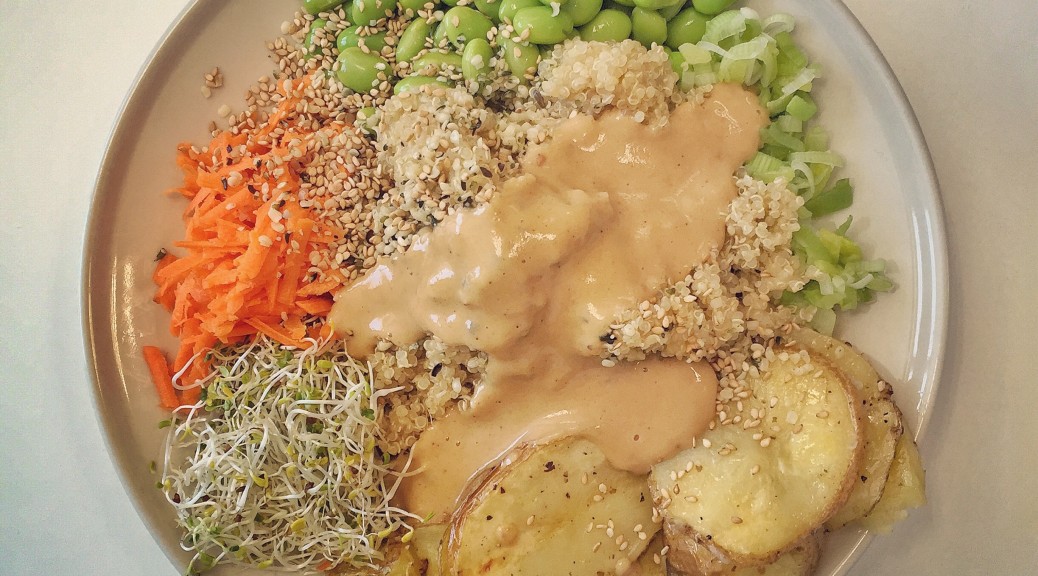
Preheat the oven to 400°F. Line a large rimmed baking sheet with parchment paper. Place the potato rounds on the prepared baking sheet and drizzle them with the oil, rubbing it on both sides to coat. Sprinkle the sweet potatoes with salt and pepper. Roast for 20 minutes, then flip the potatoes and roast for 8 to 10 minutes more, until tender and lightly browned.
Meanwhile, combine the quinoa with 1½ cups water in a saucepan and bring to a slow boil. Turn the heat down, cover, and simmer until the water is absorbed, about 15 minutes.
To assemble, divide the cooked quinoa evenly between 2 plates or bowls and season it with salt and pepper. Top with the roasted potato rounds, the edamame, carrots, green onion, cilantro, the sesame seeds, hemp seeds, and sprouts.
FOR THE ORANGE-MAPLE MISO DRESSING:
In a mini or regular food processor, combine the miso, vinegar, sesame oil, tahini, orange juice, water, and maple syrup and process until well combined.
Drizzle with Orange-Maple Miso Dressing and enjoy!
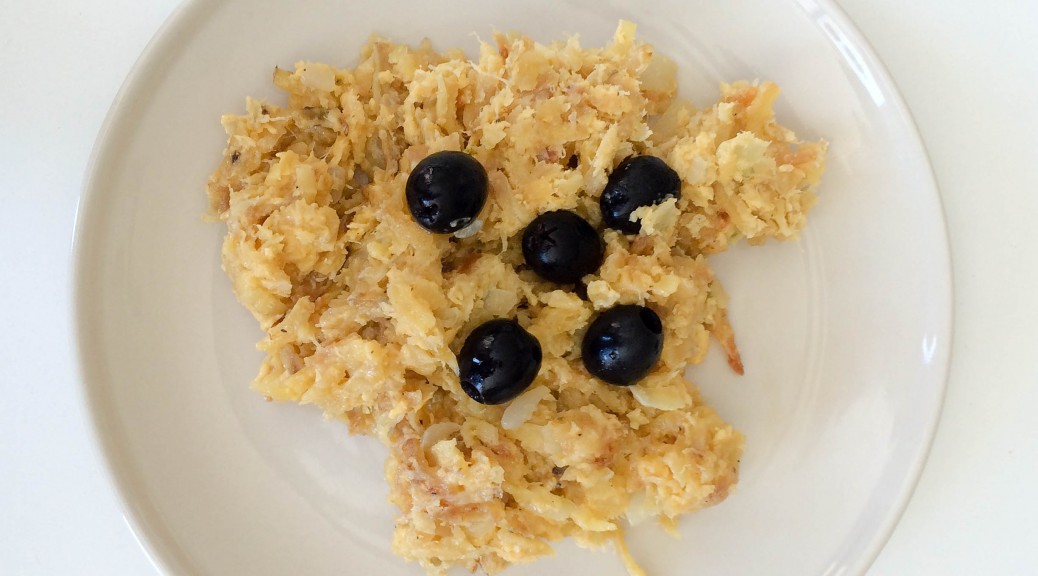
Portuguese love cod (bacalhau). And Bacalhau à Brás is arguably the most common bacalhau dish in Portugal. João is Portuguese, so he loves Bacalhau à Brás. And he shared this love with us. ❤️
Chop the onions and garlic to small pieces and mince the cod.
In a deep pan, sweat the onions and garlic until golden, then add the pieces of cod, and cook for a few minutes, until it soaks up the oil.
Then add the potatoes and stir whilst adding the beaten eggs with salt and pepper to taste. (Remember: the chips and the cod are already salty enough!)
Stir for a few minutes, until the chips moisten but before the eggs become an omelette.
I have lived for a long while in NYC and also spent some time in London. Both cities, NY especially, have a deeply ingrained culture of street food. One of my favourite forms of street food is the taco. In NY and many other cities in the USA you can find a plethora of tacos for sale from street vendors… anything from tongue, to chicken, to grilled meat, to… fish! There is a Baja style fish taco which uses deep fried fish. My version is less fussy and quicker using grilled fish instead. For me the key ingredient that makes or breaks a fish taco isn’t the fish, it’s the chipotle mayo — for me it’s an essential component. Finally, the ultimate taco is all about the garnish: you want colour, texture, and flavour to all complement each other.